
Buying a next generation cooling system is not simply a decision about lower temperatures. It is a decision about energy use, reliability, maintenance, noise, and future expansion. A system that looks impressive in a showroom may perform poorly in a dusty plant, a crowded data room, or a humid coastal building. Real conditions matter.
Roger Schmidt, an IBM thermal engineer and recognized data-center cooling specialist, has often explained the value of liquid cooling with this observation: “Water is 3,500 times more effective than air at removing heat.” That principle helps buyers understand why modern systems increasingly combine liquid loops, intelligent controls, immersion methods, or hybrid designs. Yet technology alone does not guarantee efficiency. Poor installation, weak filtration, unsuitable water quality, and limited technician support can quickly reduce performance.
This guide, “10 Tips for Buying Next Generation Cooling Systems,” examines the practical details behind a responsible purchase. It considers cooling capacity, coefficient of performance, control software, noise levels, refrigerants, service access, and total operating costs. It also asks uncomfortable questions. Will the system remain efficient during peak demand? Can local contractors repair it? What happens when one sensor fails?
The right choice is rarely the most expensive option. Sometimes, a simpler design is safer. Sometimes, the promised savings are difficult to achieve. Buyers should compare measured performance, not attractive claims. A careful evaluation may take longer, but replacing an unsuitable cooling system costs far more. Small details matter. And assumptions deserve another look.
Defining cooling requirements is the most important step when selecting a next-generation cooling system. A powerful unit is not automatically the right unit. Start with the heat load from equipment, lighting, people, and outdoor conditions. Record peak demand, average demand, and seasonal changes. Include future expansion plans. Guessing is expensive.
I have seen facilities struggle because their calculations ignored humidity and air distribution. Measure inlet temperatures, airflow paths, and restricted areas before setting performance goals. Set clear limits for temperature, humidity, noise, energy use, and recovery time after a fault. Then test these targets under realistic operating conditions. A laboratory result may not reflect a dusty, crowded equipment room. Small gaps matter.
Performance goals should also include reliability and maintenance access. Calculate expected energy consumption at partial and full load, not only at maximum capacity. Check applicable safety requirements and environmental regulations with qualified engineers. Build in monitoring for temperature changes, blocked filters, leaks, and unusual vibration. I prefer simple alarms that operators can understand quickly. Complex dashboards can hide urgent problems. Leave space around major components for inspection and repair. An honest plan should admit uncertainty, document its assumptions, and schedule a review after several months of operation.
Buying a next-generation cooling system starts with a fair technology comparison, not a glossy efficiency number. The International Energy Agency’s The Future of Cooling reports that global space-cooling energy demand could more than triple by 2050. That projection makes part-load performance, maintenance, and controls practical buying criteria.
Variable-speed refrigerant systems respond quickly and suit buildings with many separate zones. They reduce unnecessary cycling, but refrigerant pipe length and leak detection require careful design. Chilled-water systems can perform efficiently across large facilities with steady demand. However, pumps, cooling towers, and water treatment add equipment and operating work. Evaporative cooling often uses less electricity in dry climates. It can consume substantial water in hot periods.
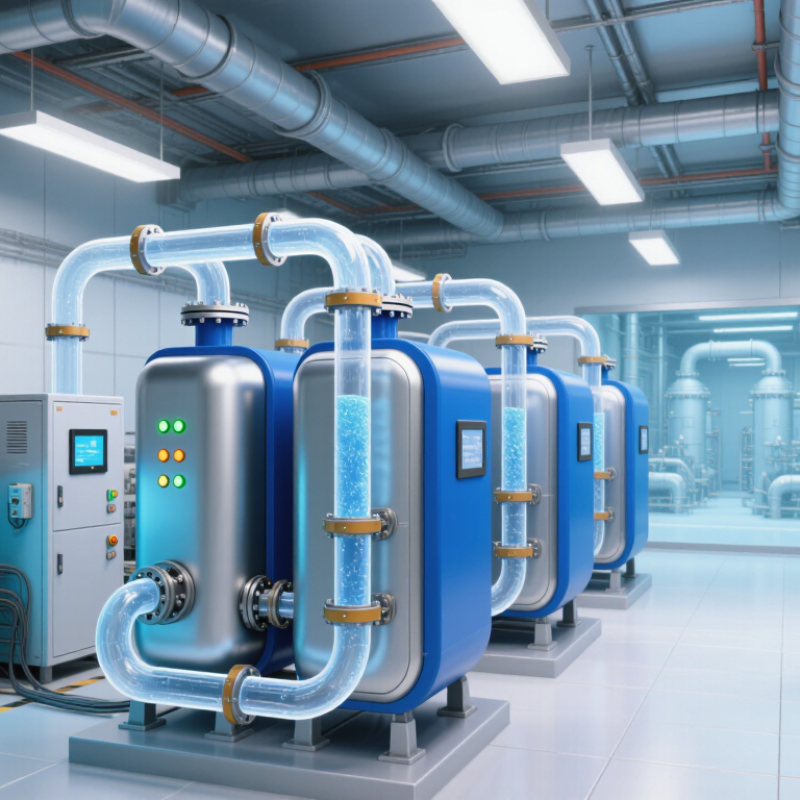
High-density computing changes the comparison. The Uptime Institute Global Data Center Survey 2024 found that cooling remains a major operational concern, while rack power continues rising. Rear-door heat exchangers and direct-liquid cooling remove heat closer to the source. They may reduce fan energy, but plumbing quality and service access become critical. The U.S. Department of Energy also emphasizes lifecycle cost, not purchase price, when evaluating high-performance systems.
A cheap installation can age badly.
Ask suppliers for measured data at 25%, 50%, and 100% load. Request seasonal efficiency, sound levels, water use, refrigerant class, and five-year service assumptions. The comparison is imperfect because climate, occupancy, and electricity tariffs distort results. I would not trust a single laboratory rating without site-specific modeling. A small sensor error can also weaken a large savings claim.
Comparing cooling systems by typical coefficient of performance (COP) helps buyers evaluate how much cooling capacity is produced per unit of electricity. Higher COP generally indicates better energy efficiency, although actual results depend on climate, load profile, maintenance, and operating conditions.
Buying a next-generation cooling system requires more than comparing advertised energy ratings. Start by examining seasonal efficiency, not only peak performance. A unit may look efficient in a showroom yet consume heavily during humid afternoons. Request test data for your climate, building load, and operating schedule. Small details matter. Check standby power, variable-speed controls, and heat recovery options.
Environmental impact should be measured across the system’s life. Ask about the refrigerant’s global warming potential, leakage controls, and recovery process. A lower-impact refrigerant helps, but poor maintenance can erase its benefit. During site evaluations, inspect insulation, airflow, drainage, and control settings. Dirty filters and blocked coils often increase electricity use before anyone notices. Require commissioning records and realistic annual consumption estimates.
Do not trust one number.
Compare projected energy use with utility bills from similar buildings. Smart meters can reveal short cycling, overnight operation, or sudden performance loss. Maintenance access also affects sustainability because neglected systems rarely remain efficient. I have found that the most expensive option on paper can sometimes deliver lower lifetime emissions. However, projections are not promises. Recheck assumptions after installation, especially occupancy and weather patterns. A careful buyer should question impressive claims, request independent verification, and leave room for better evidence.
Buying a next-generation cooling system starts with compatibility, not glossy specifications. Check voltage, refrigerant requirements, duct dimensions, drainage, and control wiring. A system that cannot communicate with existing sensors may lose its smartest functions. The U.S. Department of Energy notes that poorly sealed ducts can significantly reduce delivered cooling, especially in hot attics. Measure twice.
Installation quality deserves equal attention. Ask for a load calculation based on room size, insulation, windows, occupancy, and local climate. Oversized equipment may cycle too quickly, leaving rooms cool but humid. ASHRAE guidance supports climate-based design rather than simple square-foot estimates. Require airflow testing, condensate protection, refrigerant-line checks, and commissioning records. Small omissions matter. A neat outdoor unit does not prove a correct installation. In practice, installers sometimes rush verification when the weather is mild, which is a weakness worth challenging.
Smart features should solve real problems. Look for temperature zoning, fault alerts, energy reports, adaptive scheduling, and manual controls during internet outages. The International Energy Agency projects global cooling demand could more than triple by 2050, increasing pressure on household efficiency. ENERGY STAR research reports that certified smart thermostats can reduce heating and cooling costs by about 8% on average, though savings vary by behavior and climate. Privacy settings also deserve scrutiny. A convenient app is not automatically a useful control system. Test the sensor location, alert timing, and recovery after a power interruption before accepting the installation.
| No. | Buying Dimension | What to Check | Practical Guidance | Why It Matters | Priority |
|---|---|---|---|---|---|
| 1 | Cooling Capacity | Match the system output to the building's calculated cooling load rather than relying only on floor area. | Request a room-by-room load calculation that considers insulation, windows, occupancy, orientation, and local climate. | An oversized system may cycle frequently and remove less humidity, while an undersized system may run continuously without maintaining comfort. | High |
| 2 | Electrical Compatibility | Verify voltage, phase, frequency, breaker capacity, disconnect requirements, and available circuit space. | Have a qualified electrician or HVAC professional compare the unit's electrical specifications with the existing service before purchase. | Electrical mismatches can cause nuisance trips, unsafe operation, installation delays, or the need for costly upgrades. | High |
| 3 | Refrigerant and Pipework | Check refrigerant type, pipe diameter, maximum line length, elevation limits, and whether existing pipework is approved for reuse. | Do not assume that an older refrigerant circuit or existing lines are automatically compatible with a new system. | Incorrect refrigerant or pipework can reduce efficiency, damage components, and create compliance or service issues. | High |
| 4 | Ductwork and Airflow | Inspect duct size, leakage, insulation, return-air capacity, filters, registers, and static pressure. | Seal accessible leaks, improve insulation where needed, and confirm that airflow meets the equipment's installation requirements. | Restricted or leaky ducts can reduce delivered capacity, increase noise, and raise energy consumption even when the equipment is efficient. | High |
| 5 | Installation Location | Measure service clearances, outdoor airflow, noise-sensitive areas, drainage routes, wall strength, and exposure to weather. | Follow the manufacturer's required clearances and provide enough space for cleaning, repairs, filter access, and condensate management. | Poor placement can restrict airflow, accelerate corrosion, increase noise, and make routine maintenance difficult. | High |
| 6 | Efficiency Ratings | Compare the applicable seasonal and full-load efficiency ratings, such as SEER2, EER2, or regional equivalents. | Evaluate efficiency together with expected operating hours, electricity prices, climate, equipment size, and installation quality. | A higher rating can lower operating costs, but the total value depends on climate, usage, purchase price, and correct sizing. | Medium |
| 7 | Variable-Speed Operation | Determine whether the compressor and indoor fan support variable-speed or staged operation and whether the controls support those modes. | Consider variable-speed operation where stable temperatures, quieter performance, or improved humidity control are important. | Modulation can reduce temperature swings and improve part-load performance, although the equipment and controls may cost more initially. | Medium |
| 8 | Smart Controls and Connectivity | Check thermostat compatibility, Wi-Fi requirements, local control options, scheduling, alerts, user permissions, and data privacy settings. | Confirm whether the system can operate basic heating or cooling functions without cloud access and whether the home network supports its requirements. | Smart functions are useful only when they remain reliable, secure, accessible, and compatible with the home's existing control system. | Medium |
| 9 | Condensate and Indoor Air Quality | Review drain routing, overflow protection, condensate pump requirements, filter dimensions, and optional humidity or air-cleaning controls. | Ensure the drain has a suitable slope or correctly sized pump, and choose filters that provide useful filtration without restricting required airflow. | Proper condensate management helps prevent water damage, while balanced filtration supports indoor air quality and system performance. | High |
| 10 | Installer, Commissioning, and Service | Evaluate installer qualifications, permit requirements, commissioning procedures, documentation, parts availability, and maintenance access. | Ask for documented airflow, electrical, refrigerant, temperature, and control checks after installation, along with a maintenance schedule. | Correct commissioning strongly affects efficiency, reliability, comfort, warranty compliance, and the system's service life. | High |
Note: Final equipment selection should follow local building codes, electrical requirements, refrigerant regulations, climate conditions, and a professional cooling-load assessment.
Performance Comes Before Advertised Efficiency
Buying a next-generation cooling system requires more than comparing advertised efficiency. The U.S. Department of Energy reports that cooling can consume up to 40% of data-center electricity. Measure real performance under changing loads. Ask for tested power usage, inlet temperatures, and control response.
Reliability Requires More Than Redundancy
Reliability begins with redundancy, service access, and clear failure procedures. The Uptime Institute’s 2023 Global Data Center Survey reported an average power usage effectiveness of about 1.58, showing that cooling choices still influence facility-wide efficiency. Check pump lifecycles, filter intervals, leak detection, and emergency operation. Small leaks matter. A system that needs specialist support for every minor fault may become expensive quickly.
Model the Full Cost and Future Capacity
Maintenance costs should include labor, water, replacement parts, software updates, and downtime exposure. Request a five-year cost model, not only a purchase price. Future scalability also deserves scrutiny. ASHRAE TC 9.9 thermal guidance supports controlled operating ranges, but higher-density computing can change those requirements rapidly. Select modular capacity where possible, with spare connection points and compatible monitoring protocols. Avoid paying for oversized equipment today without a credible expansion plan. No forecast is perfect. I would still challenge every growth assumption, especially when projected demand comes from an untested workload. Pilot testing in one room can reveal vibration, humidity, and control problems before they affect the entire facility.