Top 10 Cooling System Reliability Questions for Buyers
Buying a cooling system is not only a capacity decision. It is a long-term reliability decision involving heat, water, controls, maintenance, and human judgment. This guide, “Top 10 Cooling System Reliability Questions for Buyers,” helps decision-makers examine what brochures often leave unclear.
Neil Rasmussen, a respected data center cooling and infrastructure expert, has stated, “The only way to achieve high availability is to eliminate single points of failure.” That principle deserves careful attention. A cooling unit may appear powerful on a test floor, yet struggle beside dusty filters, blocked airflow, or unstable power. Buyers should ask about redundancy, verified performance, component life, alarm accuracy, service access, and recovery after a sudden failure.
Look closely at the details. Can technicians replace a fan without stopping the entire system? Does the controller record rising temperatures before equipment protection activates? Are pumps, compressors, sensors, and valves tested under realistic operating conditions? These questions reveal more than a polished efficiency number.
Real experience also complicates the picture. More equipment does not always create more reliability. Extra components can introduce new failure points, maintenance demands, and control conflicts. Sometimes, a simpler design performs better.
That can be uncomfortable.
Cooling system reliability depends on design discipline and daily operation. It also depends on honest documentation, trained technicians, spare parts, and measurable service commitments. The following questions are intended to expose hidden risks before purchase, while leaving room for one important reflection: no cooling system is perfectly reliable. The strongest choice is the system whose weaknesses are visible, tested, and manageable.
Cooling System Reliability: Core Concepts Buyers Should Understand
Top 10 Cooling System Reliability Questions for Buyers
Cooling System Reliability: Core Concepts Buyers Should Understand
Reliable cooling begins with the operating environment, not the product brochure. Buyers should define heat load, ambient temperature, dust exposure, humidity, and daily running hours. A system that performs well in a clean test room may struggle beside a furnace or in a dusty plant. Real conditions matter.
Ask how reliability is measured. Useful evidence includes failure-rate data, endurance-test records, service intervals, and documented fault histories. Mean time between failures can help, but it is not a guarantee. Request the test conditions behind every number. Otherwise, comparisons may be misleading. Small details matter.
Look closely at redundancy and failure behavior. Can one fan, pump, or sensor fail without stopping the process? Does the system provide alarms before temperatures become dangerous? Check access to filters, electrical parts, and drainage points. Maintenance should be practical, not merely possible. Noise matters. So does energy use.
Buyers should also examine materials, control logic, spare-part availability, and technician training. A reliable design may still perform poorly when maintenance instructions are unclear. Installation quality deserves equal attention. Even strong equipment can fail because of blocked airflow, loose wiring, or incorrect settings. No design is flawless, and published specifications rarely show every weakness. Ask what failed during testing, how it was corrected, and which risks remain.
How to Evaluate Cooling Performance Under Real Operating Conditions
Top 10 Cooling System Reliability Questions for Buyers
Real operating conditions matter more than brochure efficiency. Ask how the system performs at peak heat, partial load, dirty filters, and unstable power. ASHRAE’s Thermal Guidelines recommend 18–27°C for common equipment environments, but outdoor heat can quickly narrow that margin. Test inlet temperatures, humidity, airflow, and pressure together. A cool outlet does not prove uniform cooling.
Request logged data from a full-load trial, not only factory results. The U.S. Department of Energy reports that cooling can represent up to 40% of data-center electricity use. Small control errors can therefore create large operating costs. Check compressor cycling, fan response, restart behavior, alarm delays, and water or refrigerant leakage. Measure sound and vibration near real working areas. Test it repeatedly.
Ask for failure records and maintenance intervals. The Uptime Institute’s 2023 Global Data Center Survey shows that outages remain a serious operational concern across facilities. Redundancy helps, but it cannot repair poor commissioning. I would question any promise based on one perfect test day. Weather changes. Loads change. Operators make mistakes. A transparent supplier should provide raw readings, test limits, and known weaknesses. Some evidence may look incomplete. That is often more credible than polished certainty.
Which Components Most Affect Long-Term Cooling System Reliability
Top 10 Cooling System Reliability Questions for Buyers
Which Components Most Affect Long-Term Cooling System Reliability
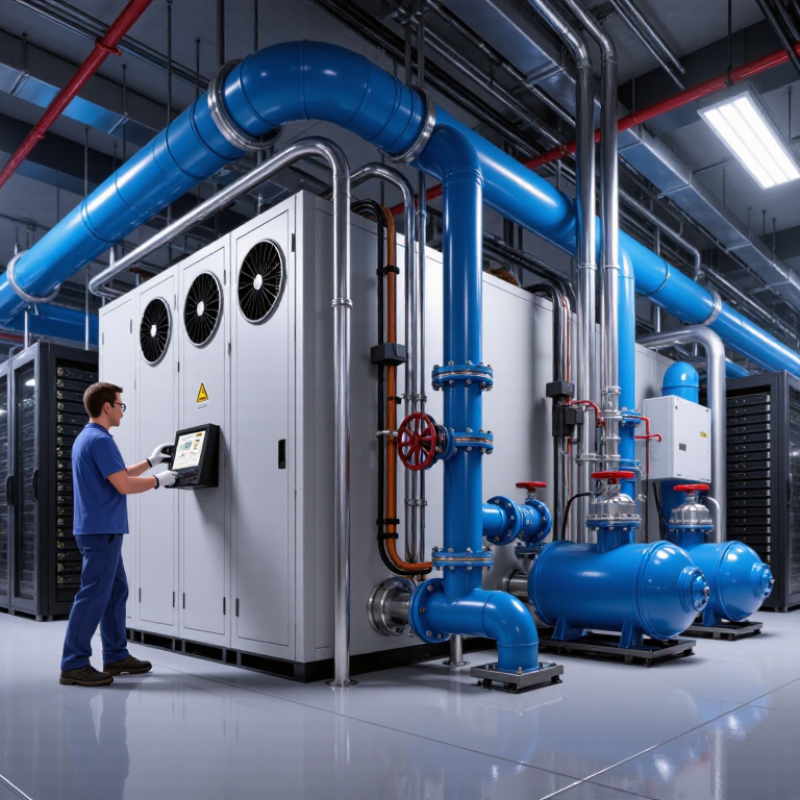
Long-term reliability begins with the heat exchanger, pump, and airflow path. Ask how each component handles fouling, vibration, corrosion, and temperature changes. A heat exchanger with narrow passages may transfer heat efficiently, yet clog faster in dusty or mineral-rich environments. Pump seals deserve equal attention because a small leak can damage nearby electrical parts.
Inspect the fans, bearings, hoses, and fittings as one connected system. Weak bearings create noise before failure, but operators may ignore that warning. Hoses should resist pressure, heat, and chemical exposure without becoming brittle. Check whether fittings remain accessible after installation. Difficult access can turn a simple inspection into a costly service visit.
Controls and sensors also shape reliability. Accurate temperature sensors prevent unnecessary cycling and delayed alarms. Ask how the system responds when a sensor fails. Does it shut down safely, or continue operating without clear feedback? Filtration is often underestimated. A blocked filter reduces airflow and forces fans to work harder. Maintenance records should show replacement intervals, failure patterns, and actual operating conditions.
Do not rely only on laboratory ratings. Real reliability depends on installation quality, water condition, cleaning habits, and operator training. One overlooked issue can outweigh several premium components. Buyers should request service access drawings, test data, and clearly defined warranty conditions. Some specifications still look impressive but leave practical questions unanswered.