China’s cooling system manufacturers are attracting global attention as data centers, factories, hospitals, and commercial buildings demand stable temperature control. Yet “made in China” does not automatically mean reliable or unreliable. The real question is measurable performance under heat, dust, voltage fluctuation, and continuous operation.
Industry evidence offers useful context. Uptime Institute’s Global Data Center Survey repeatedly identifies cooling, power, and environmental-control failures as recurring outage risks. Its findings also show that even short interruptions can create serious financial and operational consequences. ASHRAE TC 9.9 guidance commonly places recommended data-center inlet temperatures between 18°C and 27°C. A system that holds this range during a 40°C summer afternoon deserves more trust than one supported only by a polished brochure. Small details matter. Fan vibration, blocked filters, leaking valves, and delayed spare parts can quietly weaken reliability.
Michael Pecht, a recognized reliability engineering researcher, defines reliability as “the probability that a product will perform its intended function for a specified period under stated conditions.” That definition challenges simple rankings. Cooling system reliability should be judged through endurance testing, failure records, component quality, control-system redundancy, and after-sales response. Certifications such as ISO 9001 may support confidence, but they cannot replace field evidence. This is where many comparisons become incomplete. Some manufacturers publish impressive efficiency figures while offering limited information about mean time between failures or service coverage. Buyers should therefore examine factory testing, installation references, emergency response times, and replacement-part availability. Chinese suppliers can be highly dependable, but reliability must be verified—not assumed.
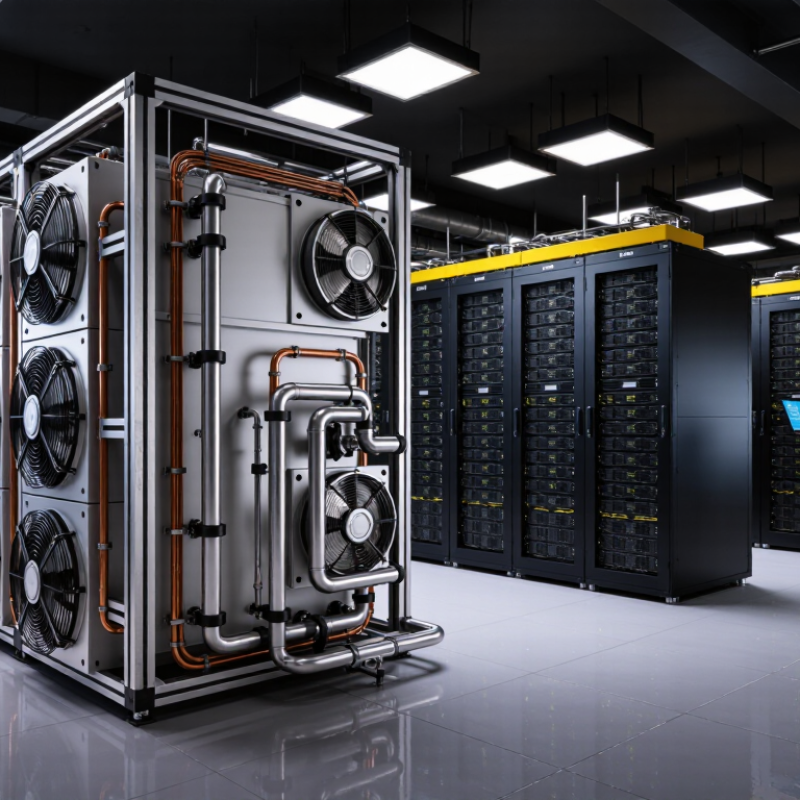
China’s cooling system market covered a broad manufacturing base in 2024. It included radiators, heat exchangers, industrial chillers, HVAC units, and thermal-management components. Production capacity remained concentrated in coastal industrial provinces, where metal processing, electronics, and logistics networks are well established.
Exact production figures require careful reading. Public statistics often classify cooling products under different customs codes. A heat exchanger may appear separately from a complete cooling unit. Therefore, one reported total can create a misleading picture. Reliable research should compare factory output, installed production lines, utilization rates, and domestic sales.
Capacity alone proves little. An idle line is not effective supply.
Export data gives another useful test. China shipped cooling equipment to machinery, automotive, energy, and building markets across many regions during 2024. Analysts should examine export value, shipment volume, destination changes, and average unit prices together. A rising export value may reflect higher material costs rather than stronger demand.
Product certification, warranty records, testing reports, and delivery consistency matter when judging manufacturers. Factory visits can reveal details that brochures hide, such as calibration routines, pressure-testing equipment, and spare-parts storage.
Some market estimates remain imperfect because private manufacturers disclose limited operating data. That weakness deserves attention, not decoration.
China’s cooling system manufacturers vary widely in reliability. A serious evaluation should begin with documented performance, not attractive sales claims. During site inspections, request test records for the exact model and operating conditions. COP shows cooling efficiency at a defined point. Higher COP usually means lower energy use, but real performance changes with ambient temperature, load, and maintenance.
SEER provides a broader seasonal view than COP. It helps compare equipment across changing yearly conditions. However, published SEER values may not match a dusty workshop or poorly balanced system. MTBF can indicate expected operating life, yet it remains a statistical estimate. Ask how the figure was calculated, which components were tested, and whether field failures were included. Vague answers deserve caution.
ISO 9001 certification supports traceable production and corrective procedures. It does not guarantee perfect equipment. Check the certificate’s validity, production scope, and audit organization. Warranty terms often reveal more practical confidence. Review coverage periods, excluded parts, response times, labor costs, and spare-part availability. A two-year warranty may be weak if compressors are excluded.
Inspect service records.
Request references from comparable installations, preferably after several cooling seasons. Speak with operators, not only sales staff. I have seen efficient prototypes perform poorly after installation because airflow assumptions were wrong. That experience makes verification essential. Reliability depends on design, manufacturing control, commissioning, and support. Missing one factor can quietly increase downtime and ownership costs.
China’s leading cooling system manufacturers now build solutions for HVAC units, data centers, industrial equipment, and battery storage. Their technologies may include variable-speed compressors, liquid cooling plates, heat exchangers, and intelligent monitoring controls. In a factory visit, engineers should inspect tubing quality, weld consistency, insulation, and final pressure testing. Small details matter.
Certifications can support reliability, but they do not guarantee every shipment performs perfectly. Look for ISO 9001 quality management, CE documentation where applicable, RoHS compliance, and test reports matched to the actual model. Experienced manufacturers often provide thermal cycling, vibration, leakage, airflow, and energy-efficiency data. Ask for samples and clear acceptance criteria. A polished catalog is not proof. Some suppliers still describe cooling capacity too broadly, which deserves careful questioning. Applications also change the design: a server room needs stable heat removal, while outdoor machinery needs dust protection and corrosion resistance.
Tips: Request a factory audit or live video inspection. Compare measured results with published figures. Confirm spare parts, warranty terms, installation support, and response times before ordering. Reliability grows through evidence, not promises.
Global-warming potential values illustrate an important technology and compliance consideration when evaluating cooling-system suppliers. R-290 and R-744 have substantially lower GWP than common HFC refrigerants, but reliability should also be assessed through design validation, factory quality systems, safety compliance, testing records, and application experience. Relevant frameworks may include ISO 9001, ISO 14001, ISO 45001, CE requirements, and product-specific safety or performance standards.
Reliability should be measured, not promised.
When assessing cooling system manufacturers in China, request controlled efficiency tests for the exact model under review. Record power input, cooling output, airflow, noise, and refrigerant temperature. Test the unit at low, normal, and peak loads. A stable result matters more than one impressive reading.
Use calibrated instruments and repeat each test several times. Keep the room temperature and water flow consistent. Small changes can distort the result. Ask for independent laboratory records, not only factory charts. A perfect test result can still mislead. Inspect the method carefully.
Failure rates require practical evidence.
Review warranty claims, returned units, repair records, and failure modes from the past three years. Separate installation errors from component defects. Field data is especially valuable: operating hours, climate, maintenance intervals, and actual downtime should be visible. Speak with users running similar systems in dusty workshops or hot warehouses. Their service logs may reveal pump wear, fan imbalance, clogged filters, or control-board failures before marketing materials do. Be cautious with MTBF figures; they are estimates, not guarantees. Some manufacturers provide detailed records, while others offer incomplete data. That gap deserves questions, and sometimes a slower purchasing decision.
China’s top cooling system manufacturers can be reliable, but reliability depends on total ownership cost, not the purchase price. A low quotation may hide higher electricity use, limited service coverage, or expensive replacement parts. During equipment evaluations, buyers should request measured COP values, annual kWh estimates, and operating data from similar installations. Ask for test records, not only polished brochures. Small details matter, such as controller accuracy and condenser performance during dusty summer conditions.
Energy usually becomes the largest long-term expense. A system running 8,000 hours yearly can make a small efficiency gap financially significant. Maintenance also affects performance. Clear filter access, standard sensors, and simple oil inspection can reduce downtime. Spare parts deserve equal attention. Confirm compressor, fan motor, valve, and control-board availability. Written lead times are useful. “Available soon” is not a service plan. Some suppliers provide technical documents, but their troubleshooting guidance may remain too general.
Service coverage often separates a dependable manufacturer from an average one. Check the number of trained technicians, response times, remote monitoring options, and warranty exclusions. Request references from facilities with similar temperatures, loads, and duty cycles. A factory audit can reveal assembly discipline and testing procedures, although one visit cannot prove every claim. I would also calculate disposal, refrigerant handling, and training costs. My assessment may still be imperfect; real sites behave differently from test rooms. That uncertainty should be priced, monitored, and reviewed after installation.